Multi-agent control room
AMS
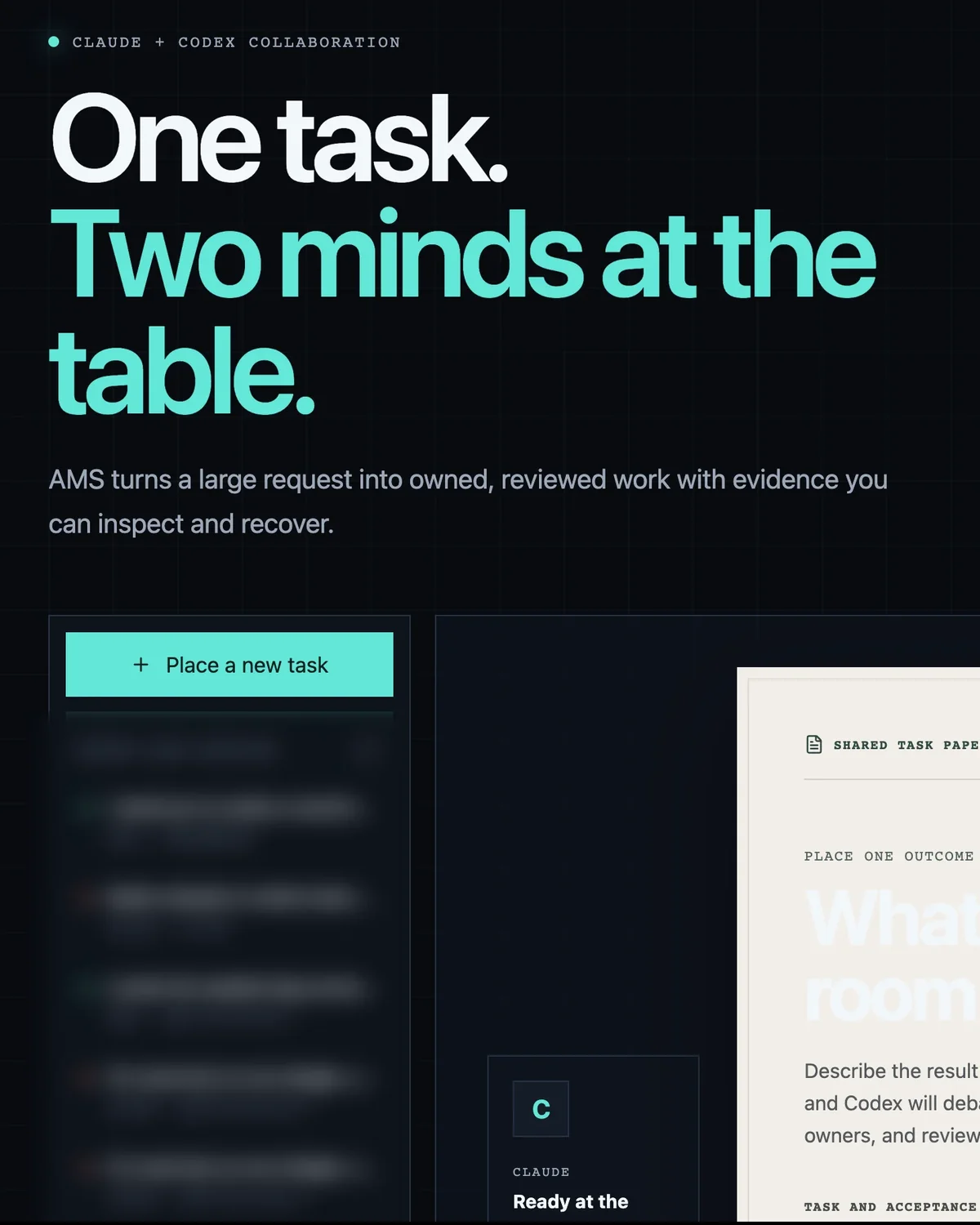
One task, two minds at the table: a local control room where Claude and Codex agree a plan, split the work, and review each other.
- Role
- Sole builder. Orchestrator, collaboration protocol, and dashboard.
- Status
- In development
- Year
- 2026
The problem
Running several AI coding agents on real work meant juggling separate terminals, logs, and logins, with no shared plan, no record of who did what, and no second pair of eyes on any agent's output.
What I did
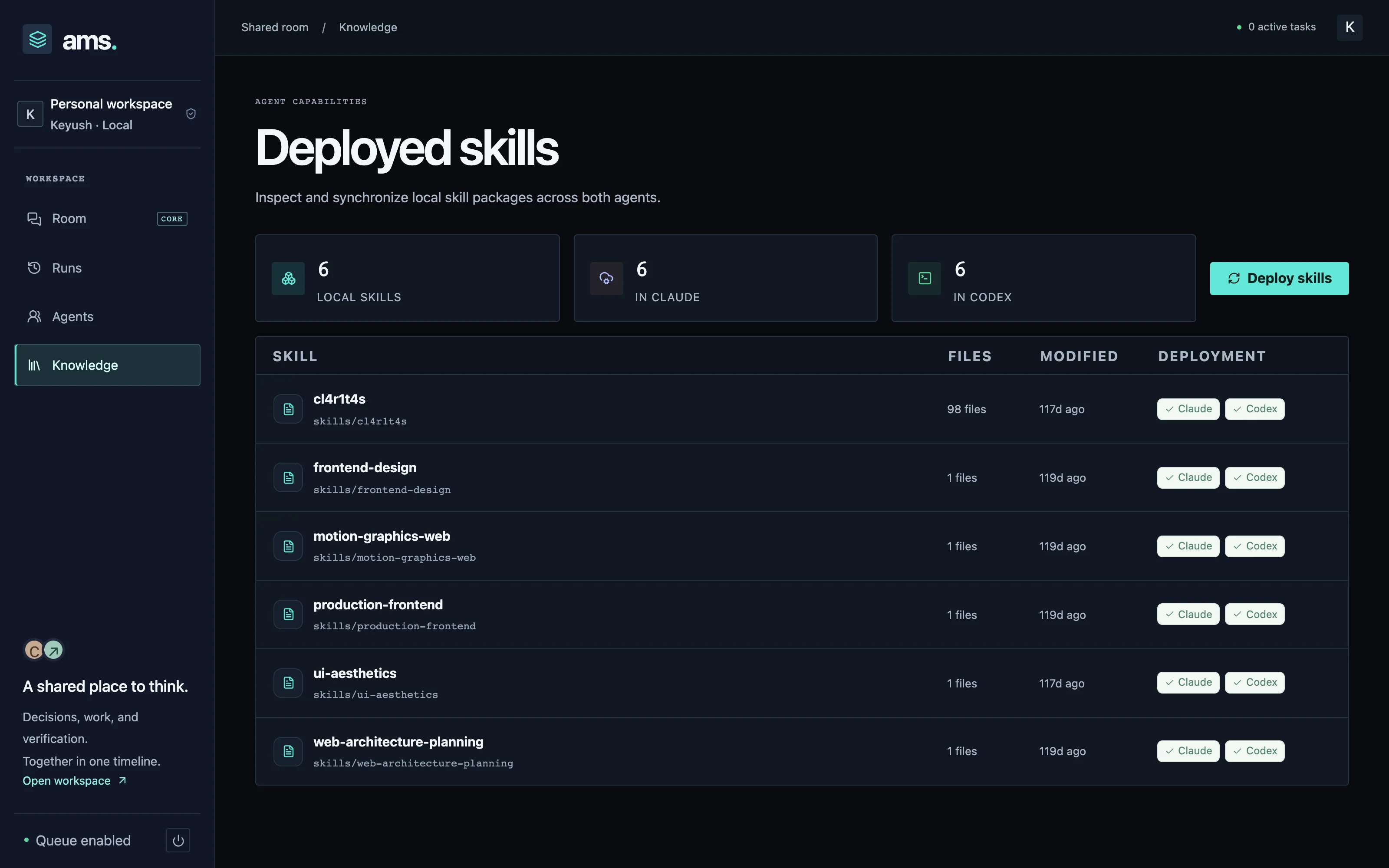
Designed the collaboration protocol and built the Python orchestrator, the account and skills model, and the Next.js dashboard that runs it.
How it works
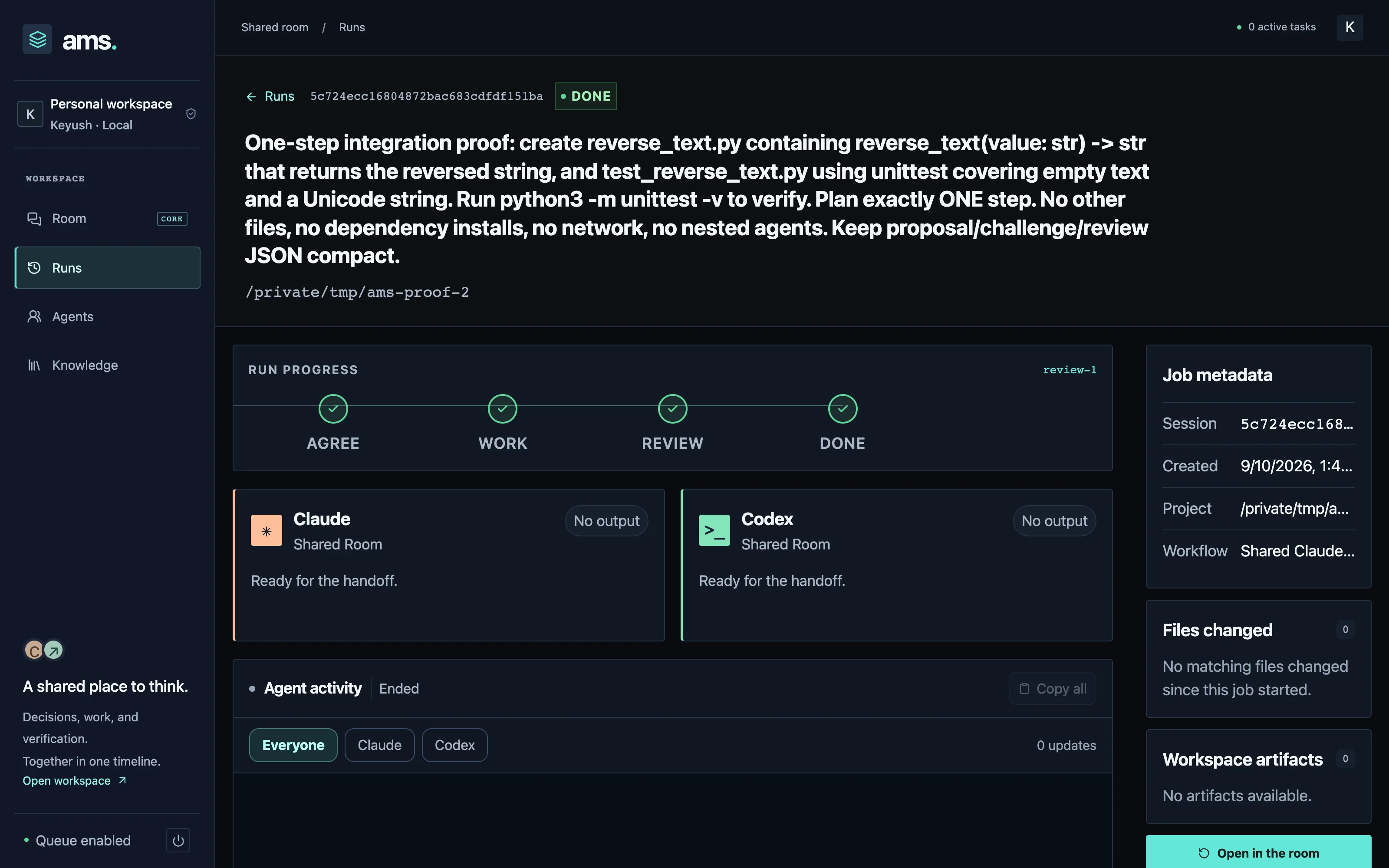
Every job runs four stages: one agent proposes a plan, the other challenges it, the work runs in dependency order with one writer per checkout, and the other agent reviews the result. Ownership is decided from the joint plan and each account's live usage. If one provider is down, the other works alone and labels its self-check honestly instead of claiming a peer review.

Captures
The hard parts
- 01
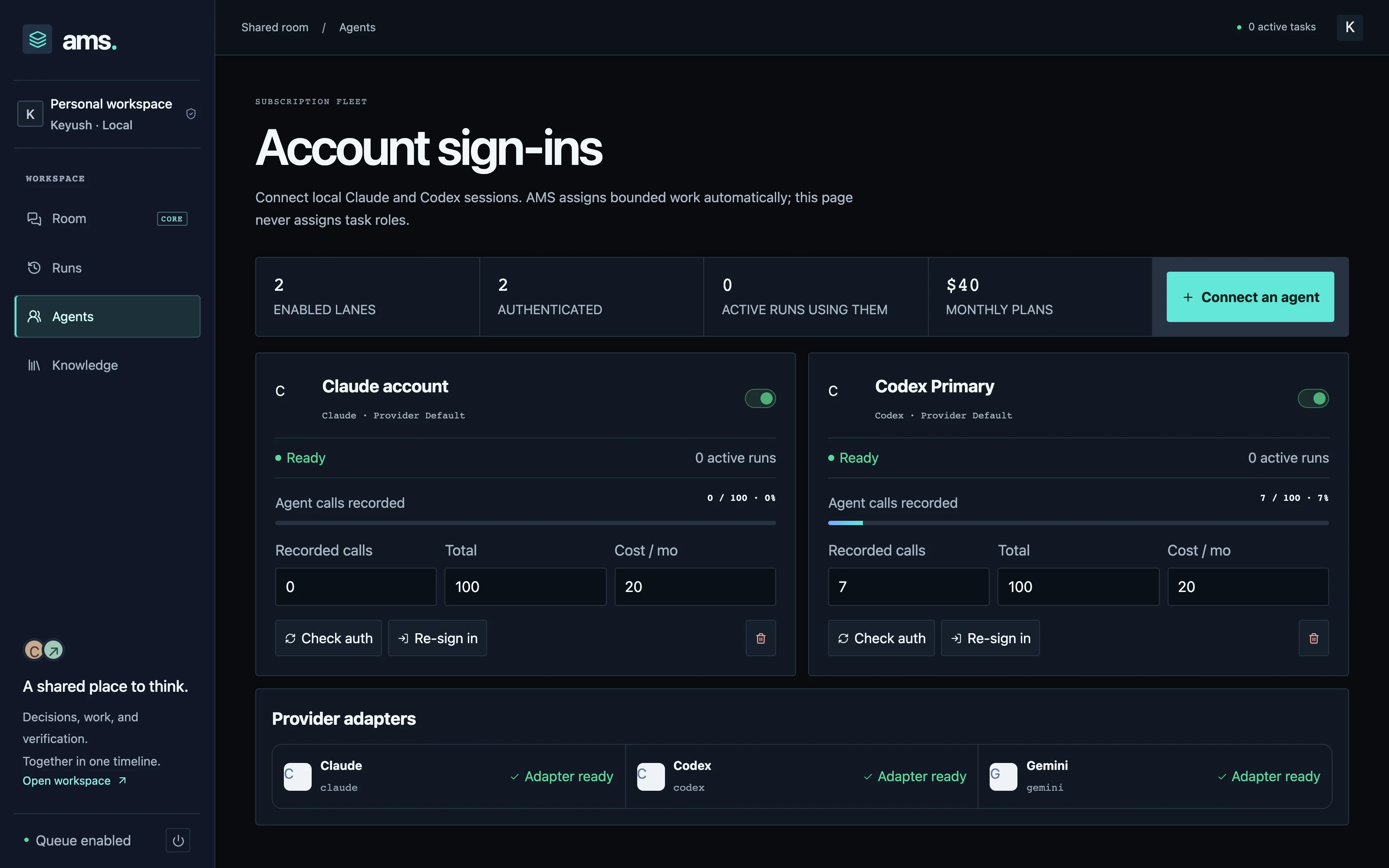
Using subscription logins only: provider API-key variables are stripped before any agent launches, so no job can bill an API account by accident.
- 02
Telling a quota limit from a broken login. Instant zero-token failures turned out to be an environment that looked signed out, not exhausted usage, and the dashboard now checks both.
What changed
- The first full live collaboration passed end to end: proposal, challenge, work, and review, with the produced code independently re-run green.
- Every run emits a downloadable report with decisions, ownership, and verification.
Built with
- Python
- SQLite
- Next.js
- React
- TypeScript
- Tailwind CSS
- SSE