AI design scout
DesignBoard
Scouts the live web for emerging lab-grown jewelry designs, scores each one on evidence, and turns the best into manufacturing blueprints.
- Role
- Sole builder. Discovery, scoring, agent pipeline, validation, and interface.
- Status
- In development
- Year
- 2026
The problem
A jewelry team needs to know which designs are rising before everyone makes them, and a factory needs specifics, not mood images. Trend boards give neither: no evidence behind the pick, and no measurements to build from.
What I did
Built the live scout, the evidence scoring, and a four-phase agent job that writes a factory brief, plus the code that audits it.
How it works
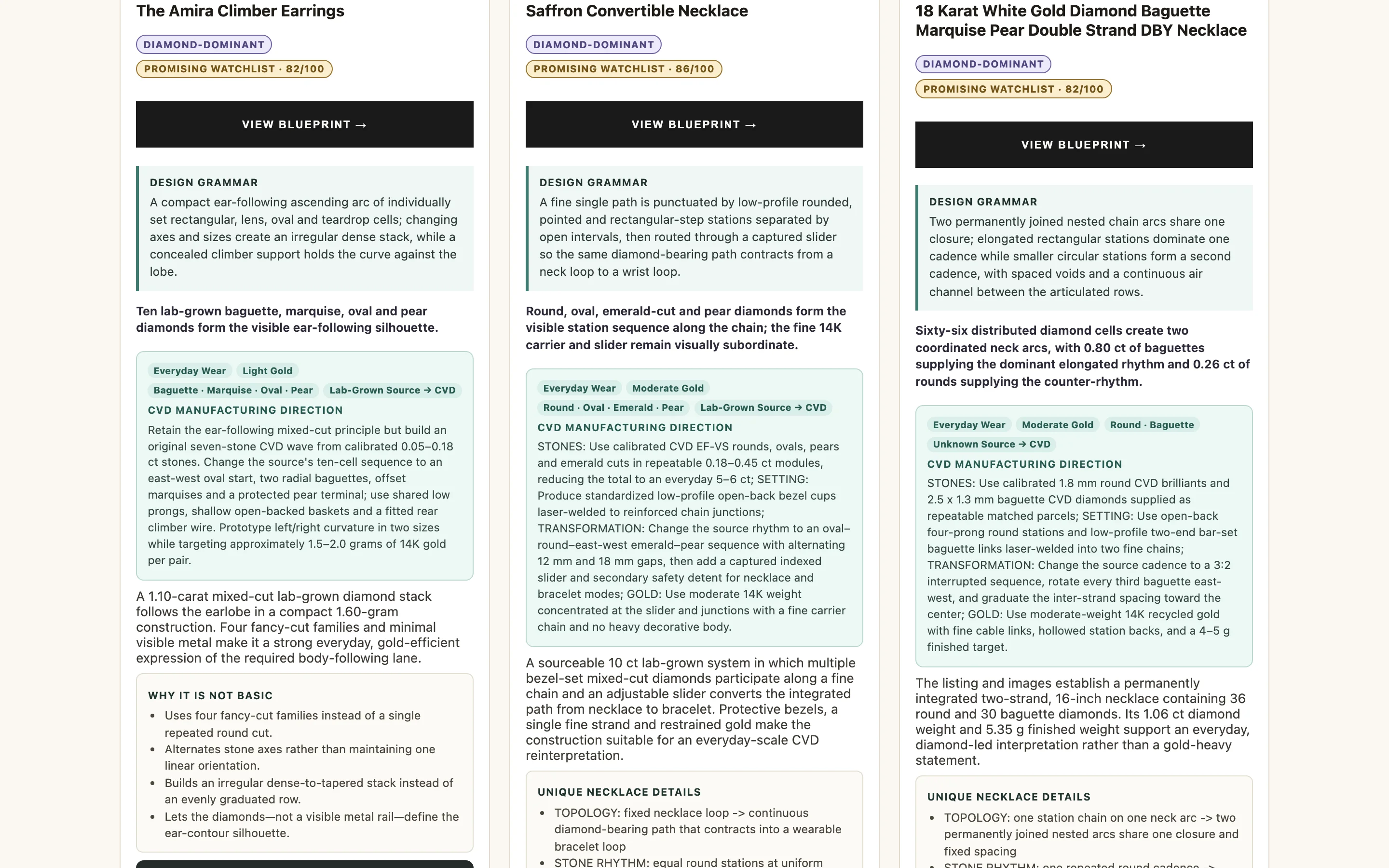
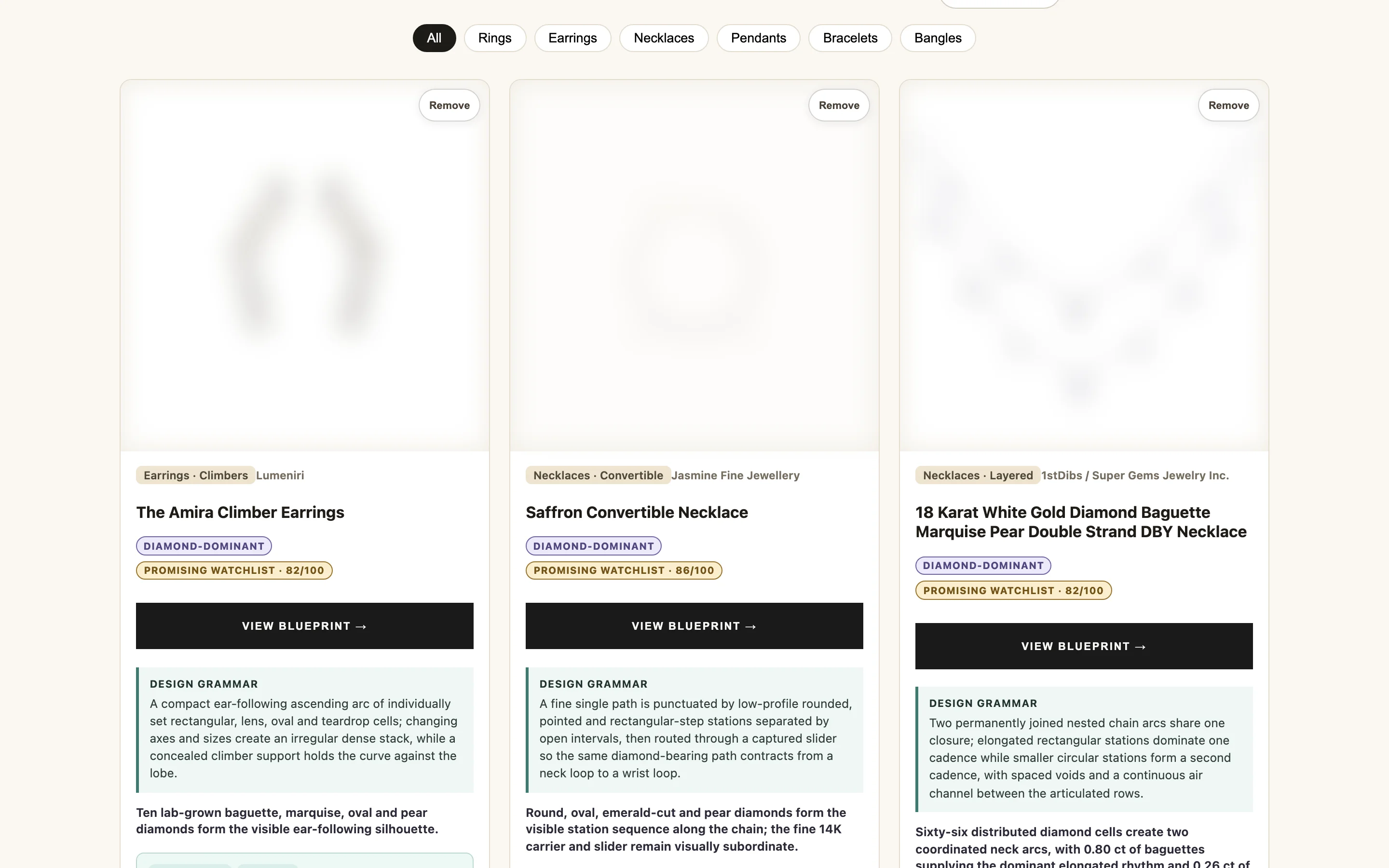
Discovery reads retailer and marketplace pages and keeps only diamond-led, non-basic designs with early momentum and low observed saturation, filtered for everyday wear, light gold and practical CVD manufacturing. Each card can then run a resumable agent job (observing, drafting, reviewing, validating) whose output must fit a 13 KB JSON schema and pass a deterministic audit that refuses measurements the photo cannot support.
Captures
The hard parts
- 01
Keeping a model honest about measurements: anything the photo cannot show is downgraded to a stated assumption, never printed as a fact.
- 02
Long agent jobs that survive restarts: atomic state files, resumable phases, and tracked child processes that are stopped cleanly when interrupted.
- 03
Separating inspiration from copying: every card must state an original lab-grown adaptation, and natural-diamond sources stay labelled as reference only.
What changed
- 38 emerging candidates on the current board, each with evidence links and a score.
- 11 finished manufacturing blueprints from real runs, each printable as a factory brief.
Built with
- React
- TypeScript
- Vite
- Ajv
- Node
- Codex CLI